
Hidden Halo Engagement Rings in Solid 9ct, 14ct & 18ct Gold
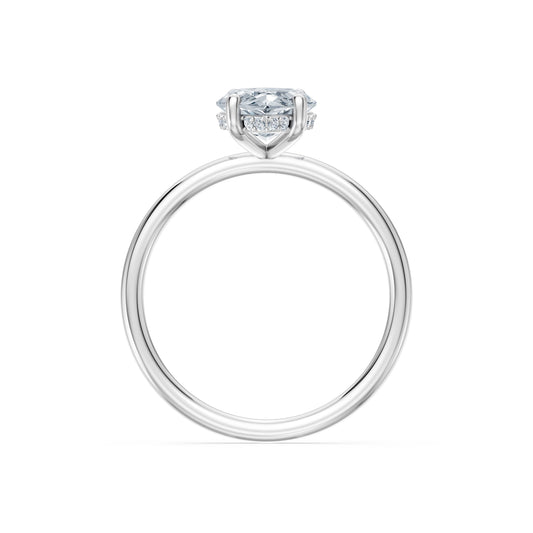
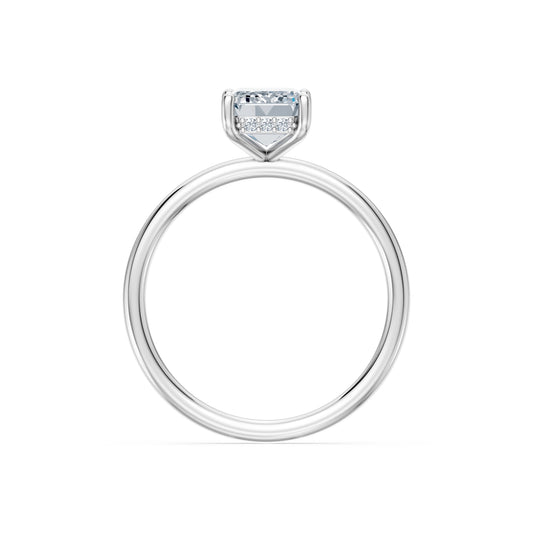
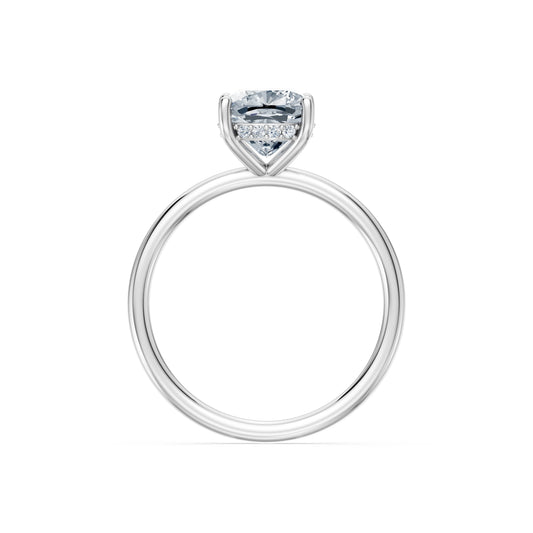
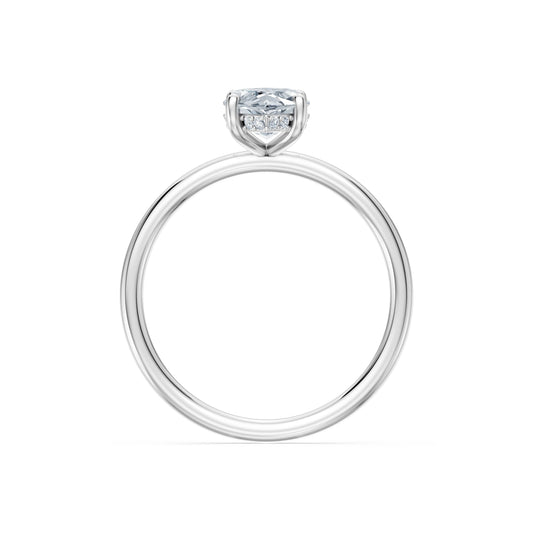
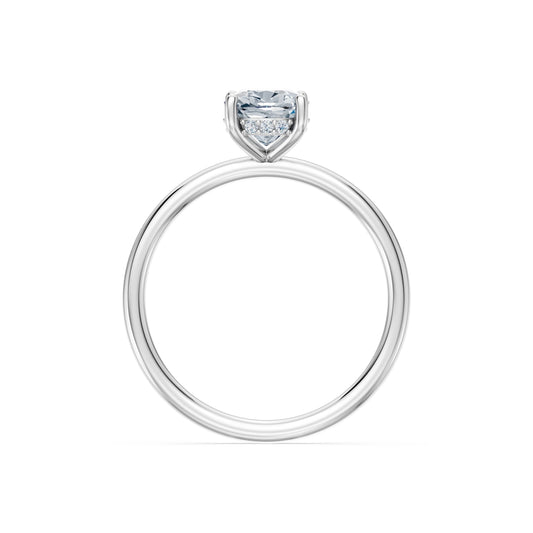
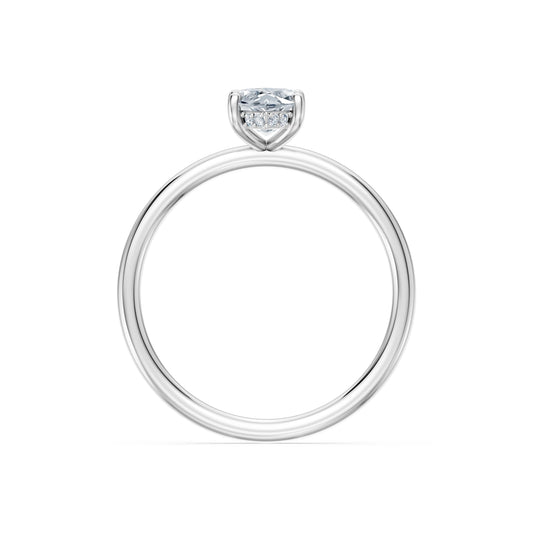
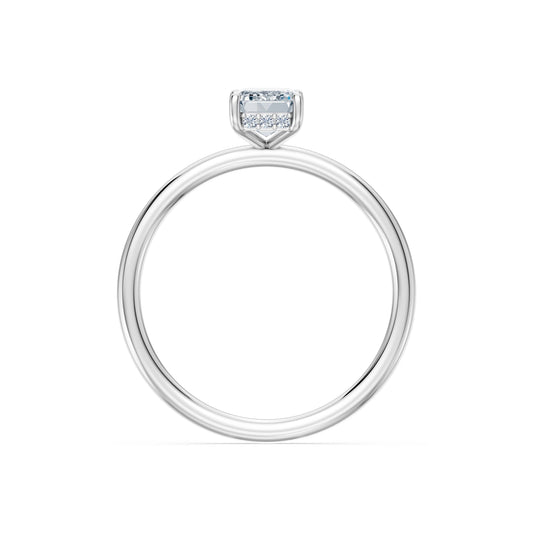
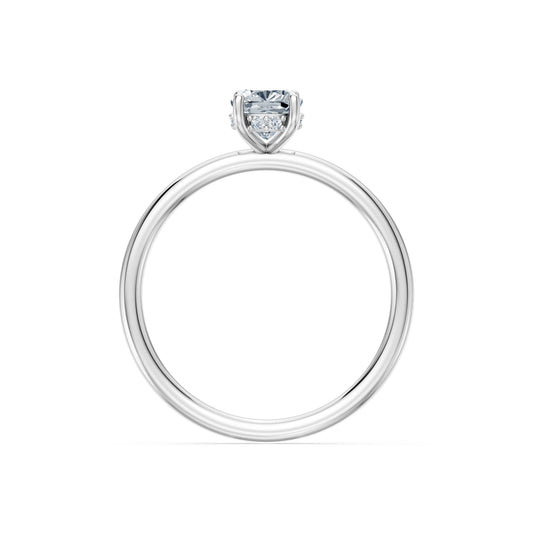
A hidden halo is a ring of small diamonds set around the collar beneath the centre stone, facing outwards rather than upwards. From above you see a clean solitaire. From the side you see a band of light underneath it. It is the only setting that adds sparkle and apparent size without changing the silhouette you actually look at most.
All eleven designs here use lab grown diamonds in oval, marquise, emerald and cushion cuts, set in solid 9ct, 14ct or 18ct gold — never plated. From £1,500, made to order in 10 to 14 days.
-
Oval Lab Grown Diamond Hidden Halo Engagement Ring 2.0ct | Qutahia Jewellery
Regular price From £1,900.00Regular price£2,400.00Sale price From £1,900.00Sale -
Marquise Lab Grown Diamond Hidden Halo Engagement Ring 2.0ct | Qutahia Jewellery
Regular price From £2,500.00Regular price£2,800.00Sale price From £2,500.00Sale -
Emerald Lab Grown Diamond Hidden Halo Engagement Ring 2.0ct | Qutahia Jewellery
Regular price From £1,900.00Regular price£2,400.00Sale price From £1,900.00Sale -
Cushion Lab Grown Diamond Hidden Halo Engagement Ring 2.0ct | Qutahia Jewellery
Regular price From £1,900.00Regular price£2,400.00Sale price From £1,900.00Sale -
Oval Lab Grown Diamond Hidden Halo Engagement Ring 1.5ct | Qutahia Jewellery
Regular price From £1,500.00Regular price£1,850.00Sale price From £1,500.00Sale -
Marquise Lab Grown Diamond Hidden Halo Engagement Ring 1.5ct | Qutahia Jewellery
Regular price From £1,700.00Regular price£2,100.00Sale price From £1,700.00Sale -
Cushion Lab Grown Diamond Hidden Halo Engagement Ring 1.5ct | Qutahia Jewellery
Regular price From £1,450.00Regular price£1,800.00Sale price From £1,450.00Sale -
Oval Lab Grown Diamond Hidden Halo Engagement Ring 1.0ct | Qutahia Jewellery
Regular price From £1,200.00Regular price£1,500.00Sale price From £1,200.00Sale -
Marquise Lab Grown Diamond Hidden Halo Engagement Ring 1.0ct | Qutahia Jewellery
Regular price From £1,300.00Regular price£1,650.00Sale price From £1,300.00Sale -
Emerald Lab Grown Diamond Hidden Halo Engagement Ring 1.0ct | Qutahia Jewellery
Regular price From £1,200.00Regular price£1,500.00Sale price From £1,200.00Sale -
Cushion Lab Grown Diamond Hidden Halo Engagement Ring 1.0ct | Qutahia Jewellery
Regular price From £1,200.00Regular price£1,500.00Sale price From £1,200.00Sale











The practical reason hidden halos exist
Most people meet the hidden halo as a styling idea — a secret detail, something only you and the wearer know is there. That is true, but it undersells it. The hidden halo solves a real engineering problem.
The halo sits on the collar between the centre stone and the band, which raises the whole setting by two or three millimetres. That gap underneath is exactly what a straight wedding band needs in order to sit flush without fouling the centre stone.
This matters most with elongated shapes. An oval or a marquise set low will usually force you into a shaped or contoured band later, which commits you to that one ring forever. Lift the same stone on a hidden halo and any plain band slides underneath. If you have not chosen the wedding ring yet — and most people have not — this quietly keeps every option open.
How much bigger does it actually make the stone look?
Less than a traditional halo, and that is deliberate.
A conventional halo surrounds the centre stone with diamonds in the same plane, so the whole cluster reads as one large stone from above. It is the cheapest way to buy visual size, and it is also the reason a lot of people can spot a halo instantly.
A hidden halo does the opposite. Because the small stones face outward from beneath, they do not extend the outline from above at all. What they do is bounce light up through the centre stone's pavilion, which brightens it and makes it read a little larger and considerably livelier — without anyone being able to say why.
If your priority is maximum apparent carat for the money, a cluster gives more. If your priority is a clean solitaire that quietly outperforms one, this is the setting.
Is the hidden halo a trend?
Fair question, and worth answering straight: yes, it is recent. The hidden halo became widely available around the mid-2010s and its popularity is still climbing. It does not have a century of precedent behind it the way a solitaire or a trilogy does.
The counterargument is structural rather than fashionable. Because the detail is invisible from the angle people actually see the ring, there is very little for a future eye to date. A hidden halo solitaire viewed from above looks like a solitaire. Whatever happens to taste, the top-down view stays neutral — which is more than can be said for most decade-marked settings.
The honest downsides
- It collects dirt. The underside of a ring is where hand cream and soap accumulate, and a hidden halo puts a dozen small stones exactly there. It needs cleaning more often than a plain solitaire — warm water, washing-up liquid, soft toothbrush, once a fortnight.
- It sits higher. Good for wedding bands, less good if you work with your hands or wear gloves regularly. A raised setting catches more.
- Setting quality is invisible. Those small stones are held by tiny beads you cannot inspect casually. Poor setting work shows up two years later as a missing stone. This is not a place to buy on price alone.
What a hidden halo engagement ring costs
This collection runs from £1,500 to £3,500. The halo itself adds relatively little — the small stones are a fraction of a carat in total — so almost all of the price difference between these rings is centre stone weight.
Every ring here uses lab grown diamonds, which is why two-carat centres appear at these figures. Gold carat barely moves the total: 9ct is harder and more scratch-resistant, 18ct is richer in colour and softer, 14ct sits between.
Common questions
Can you see a hidden halo when the ring is worn?
From directly above, no. At an angle and from the side, clearly — which is most of the time in normal conversation. It reads as a bright line under the stone rather than as a ring of diamonds.
Hidden halo or regular halo?
A regular halo buys more apparent size for less money and is unmistakable. A hidden halo keeps the outline of a solitaire and adds brightness and lift instead. Choose the regular halo for maximum presence, the hidden halo if you want the ring to look like a single stone.
Can a hidden halo ring be resized?
Yes. The halo sits on the collar, not the band, so the shank can be worked on normally — unlike a full pavé band, which is far more restricted. UK resizing is free with us.
Can I add a hidden halo to a different design?
Yes. Everything is made to order in our own workshop, so the centre stone, shape, gold carat and setting are all specifiable. If what you want is not shown, commission it — the first conversation costs nothing.
Frequently asked questions
What's a hidden halo?
A ring of small diamonds set underneath the centre stone rather than around it — invisible from the top view but catches the light from the side and adds sparkle without changing the ring's outward simplicity.
Why choose a hidden halo over a regular halo?
It keeps the classic solitaire look from above while adding extra brilliance underneath — a good middle ground if you want more sparkle without a bigger visual footprint on the finger.
What's the starting price for a hidden halo ring?
From around £1,500 in solid gold with a lab grown centre stone — final price depends on the centre stone's carat weight and cut.
Is a hidden halo ring made to order?
Yes, like our other engagement rings it's built around your chosen stone and size, typically ready in 10-14 days.