
Oval Engagement Rings in Solid 9ct, 14ct & 18ct Gold
An oval engagement ring gives you more visible stone for your money. Because the oval is stretched along one axis, more of its weight sits where you can see it — a well-cut oval reads around 10% larger than a round diamond of the same carat weight, and the elongated outline lengthens the finger. That is the whole appeal, and it is measurable rather than a matter of taste.
Every oval cut engagement ring here is set in solid 9ct, 14ct or 18ct gold — never plated, never gold-filled — in yellow, white or rose. Prices run from £1,050, and most of this collection is lab grown, which is why a two-carat oval sits where a natural one-carat usually does. Made to order in 10 to 14 days.
-
Oval Cut Solitaire Diamond Ring 0.3ct | Qutahia Jewellery
Regular price From £675.00Regular price£850.00Sale price From £675.00Sale -
Oval Lab Grown Diamond Three Stone Engagement Ring 2.0ct | Qutahia Jewellery
Regular price From £2,750.00Regular price£3,000.00Sale price From £2,750.00Sale -
Oval Lab Grown Diamond Three Stone Engagement Ring 1.5ct | Qutahia Jewellery
Regular price From £2,250.00Regular price£2,500.00Sale price From £2,250.00Sale -
Oval Lab Grown Diamond Three Stone Engagement Ring 1.0ct | Qutahia Jewellery
Regular price From £1,750.00Regular price£2,200.00Sale price From £1,750.00Sale -
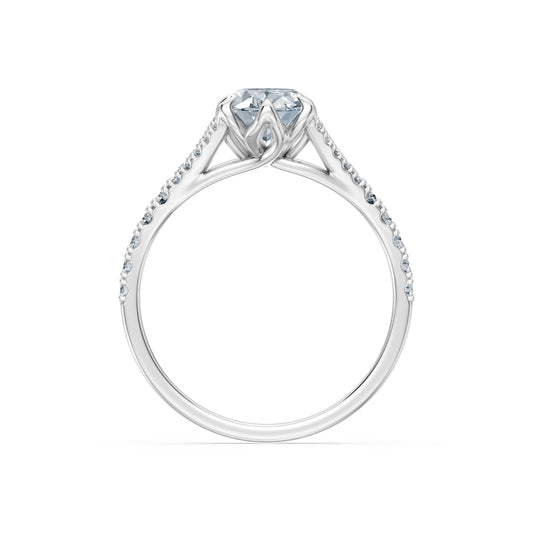
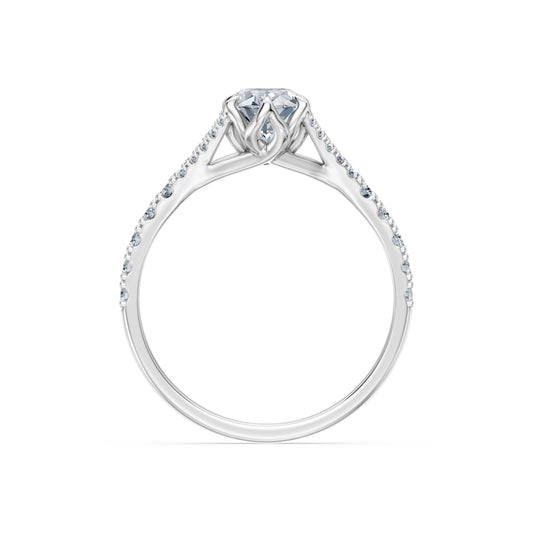
Oval Lab Grown Diamond Split Shank Engagement Ring 2.0ct | Qutahia Jewellery
Regular price From £2,400.00Regular price£2,700.00Sale price From £2,400.00Sale -
Oval Lab Grown Diamond Split Shank Engagement Ring 1.5ct | Qutahia Jewellery
Regular price From £1,700.00Regular price£2,100.00Sale price From £1,700.00Sale -
Oval Lab Grown Diamond Split Shank Engagement Ring 1.0ct | Qutahia Jewellery
Regular price From £1,400.00Regular price£1,750.00Sale price From £1,400.00Sale -
Oval Lab Grown Diamond Cluster Engagement Ring 2.0ct | Qutahia Jewellery
Regular price From £2,000.00Regular price£2,500.00Sale price From £2,000.00Sale -
Oval Lab Grown Diamond Cluster Engagement Ring 1.5ct | Qutahia Jewellery
Regular price From £1,550.00Regular price£1,900.00Sale price From £1,550.00Sale -
Oval Lab Grown Diamond Cluster Engagement Ring 1.0ct | Qutahia Jewellery
Regular price From £1,250.00Regular price£1,600.00Sale price From £1,250.00Sale -
Oval Lab Grown Diamond Pave Engagement Ring 2.0ct | Qutahia Jewellery
Regular price From £1,900.00Regular price£2,300.00Sale price From £1,900.00Sale -
Oval Lab Grown Diamond Pave Engagement Ring 1.5ct | Qutahia Jewellery
Regular price From £1,500.00Regular price£1,850.00Sale price From £1,500.00Sale -
Oval Lab Grown Diamond Pave Engagement Ring 1.0ct | Qutahia Jewellery
Regular price From £1,200.00Regular price£1,500.00Sale price From £1,200.00Sale -
Oval Lab Grown Diamond Hidden Halo Engagement Ring 2.0ct | Qutahia Jewellery
Regular price From £1,900.00Regular price£2,400.00Sale price From £1,900.00Sale -
Oval Lab Grown Diamond Hidden Halo Engagement Ring 1.5ct | Qutahia Jewellery
Regular price From £1,500.00Regular price£1,850.00Sale price From £1,500.00Sale -
Oval Lab Grown Diamond Hidden Halo Engagement Ring 1.0ct | Qutahia Jewellery
Regular price From £1,200.00Regular price£1,500.00Sale price From £1,200.00Sale -
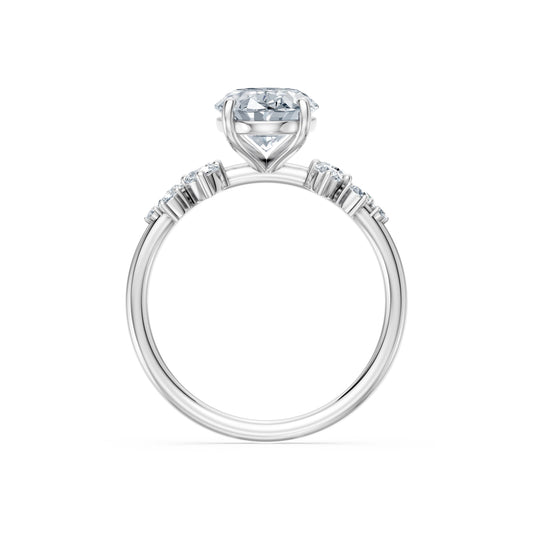
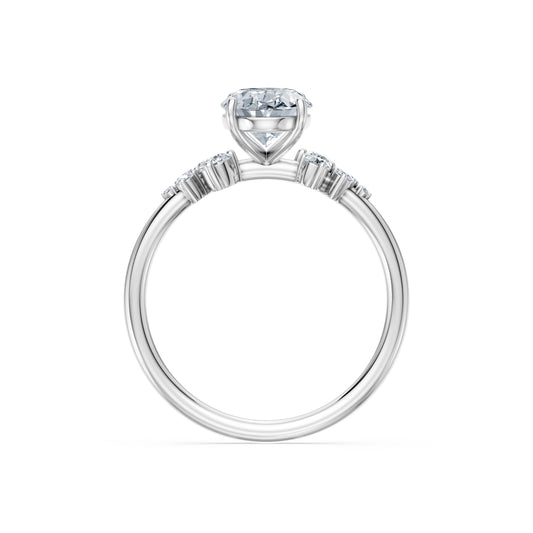
Oval Lab Grown Diamond Solitaire Engagement Ring 2.0ct | Qutahia Jewellery
Regular price From £1,750.00Regular price£2,250.00Sale price From £1,750.00Sale -
Oval Lab Grown Diamond Solitaire Engagement Ring 1.5ct | Qutahia Jewellery
Regular price From £1,400.00Regular price£1,750.00Sale price From £1,400.00Sale -
Oval Lab Grown Diamond Solitaire Engagement Ring 1.0ct | Qutahia Jewellery
Regular price From £1,100.00Regular price£1,400.00Sale price From £1,100.00Sale -
Solitaire Diamond Ring Oval 0.3ct | Qutahia Jewellery
Regular price From £850.00Regular price£1,050.00Sale price From £850.00Sale -
Solitaire Eternity Diamond Ring Oval 0.3ct | Qutahia Jewellery
Regular price From £900.00Regular price£1,100.00Sale price From £900.00Sale


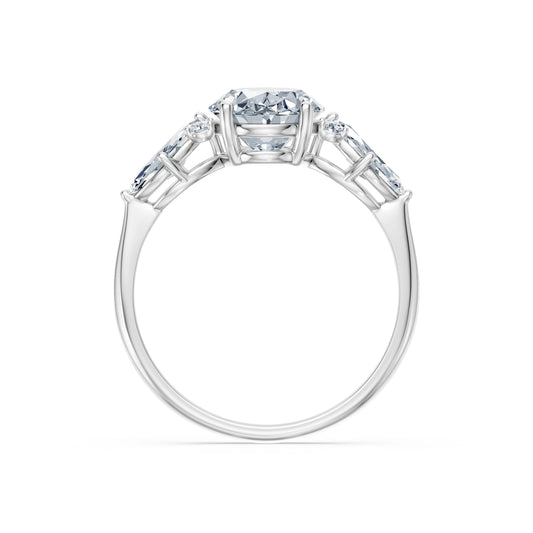

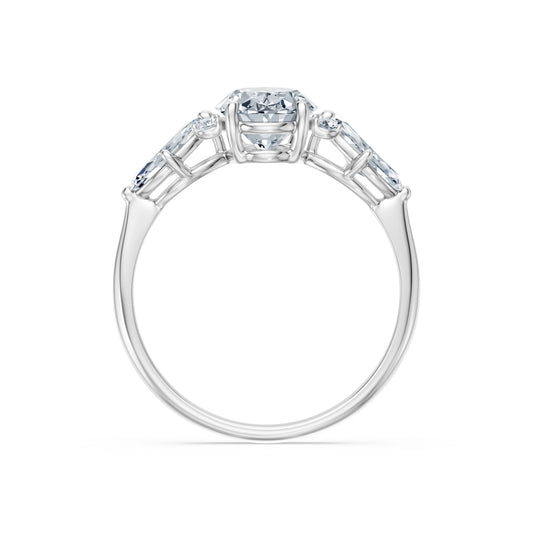

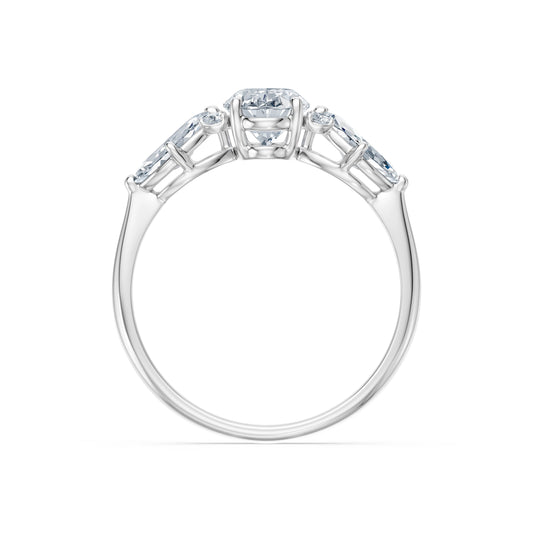

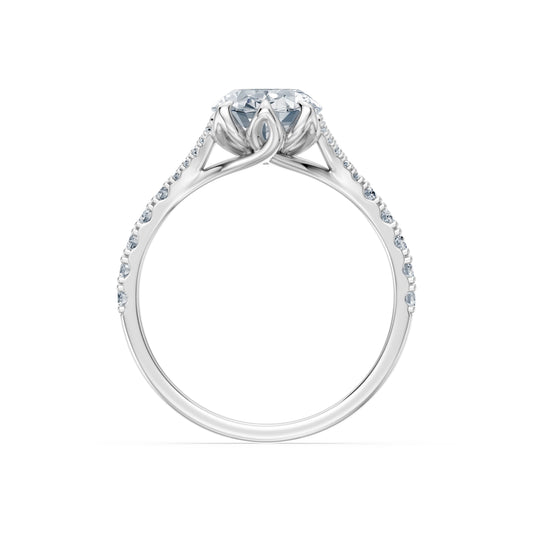










Are oval engagement rings still in style?
This is the question we get asked more than any other, usually phrased as a worry: will it look dated in ten years?
The honest answer is that the oval is not a new shape. It was cut in its modern brilliant form in the 1960s and has been in continuous production since. What is recent is its popularity — it overtook the princess cut to become the second most-requested shape after the round brilliant, and that surge is what makes people nervous.
The useful distinction is between the stone and the setting. An oval diamond in a plain solitaire mount will look no more dated in 2040 than a round one does now, because neither shape carries a decade stamp. What ages is fashion detail: a very thin band, a heavy double halo, an unusual prong style. If you want the shape without the risk, put it on a simple band and let the stone do the work.
The bow tie — the one thing to check before you buy an oval
Every elongated brilliant cut, oval included, has a bow tie: a darker band running across the middle of the stone, shaped roughly like its name. It happens because your own head blocks light from reaching the centre facets when you look straight down at the diamond.
Some degree of bow tie exists in every oval ever cut. That is physics, not a defect. What separates a good oval from a poor one is how visible it is. In a well-proportioned stone the bow tie is faint and only appears at certain angles. In a badly cut one it is a hard black bar sitting in the middle of the diamond, and no amount of cleaning or setting will hide it.
This is also why an oval cannot be bought safely on paper alone. A grading certificate gives you carat, colour and clarity, and for fancy shapes it does not assign an overall cut grade the way it does for rounds — the GIA explains the 4Cs and their limits here. Every oval in this collection is looked at face-up before it ships, and anything with a heavy bow tie does not go out.
Length-to-width ratio: what the number means
An oval's proportions are written as a length-to-width ratio. A stone measuring 8mm by 6mm has a ratio of 1.33. The number tells you how stretched the outline is, and it changes the look of the ring far more than a tenth of a carat does.
- 1.30 to 1.35 — rounder, softer. Reads closer to a cushion. Suits smaller hands.
- 1.35 to 1.45 — the classic oval most people picture. The safest choice if you are buying as a surprise.
- 1.45 and above — noticeably elongated. Dramatic, lengthens the finger most, and shows the bow tie more readily.
There is no correct ratio, but there is a wrong one for a given hand. If you are choosing for someone else and have no idea of their preference, stay near 1.40.
Why an oval looks bigger than a round of the same carat
Carat is weight, not size. Two diamonds of identical weight can present very differently depending on how that weight is distributed. A round brilliant carries more of its mass in the pavilion — the cone below the girdle that you never see once it is set. An oval spreads more of the same weight across the face-up surface.
In practice a one-carat oval measures roughly 7.7mm by 5.7mm against a one-carat round's 6.5mm diameter. The oval covers more of the finger, and the eye reads that as a larger stone. It is the single most cost-effective decision available when choosing a shape.
Choosing the setting
The oval works with almost every setting, but each one does something different to it:
- Solitaire — nothing competes with the outline. The most forgiving choice over time.
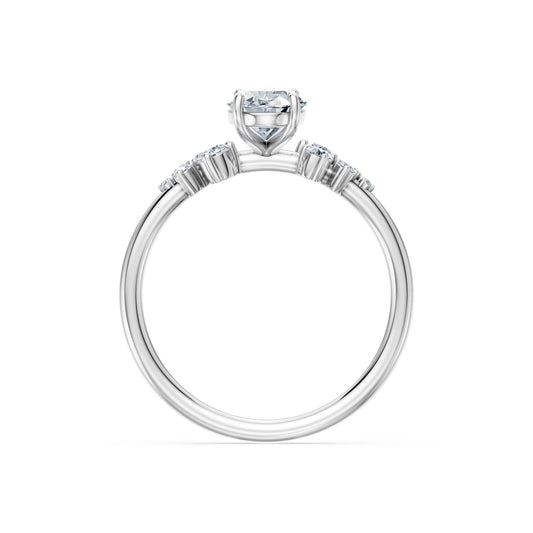
- Hidden halo — small stones tucked under the oval, invisible from above. Lifts the stone and adds perceived size without changing the silhouette.
- Three stone — side stones extend the horizontal line and make the ring read wider on the hand.
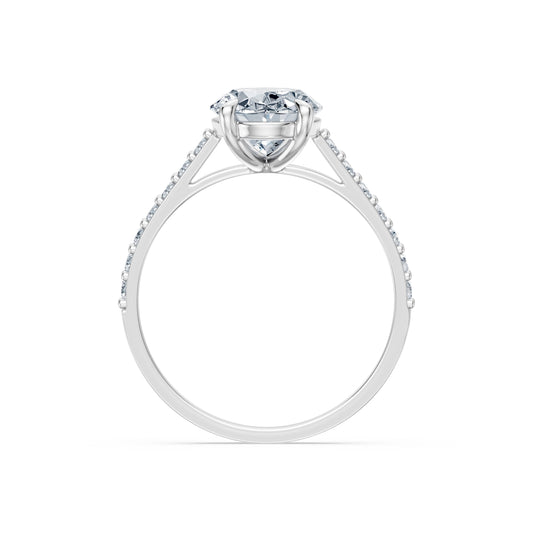
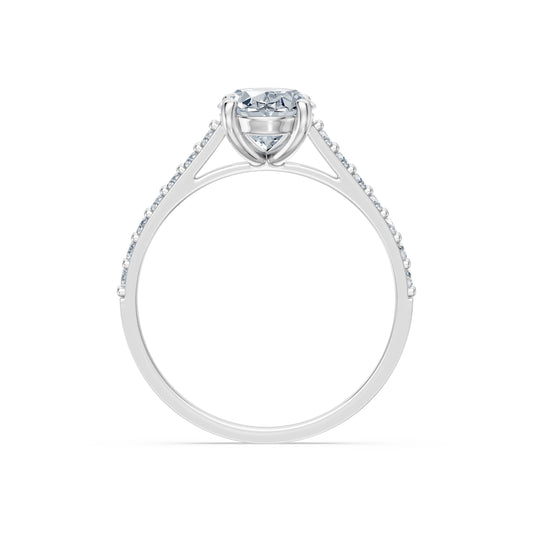
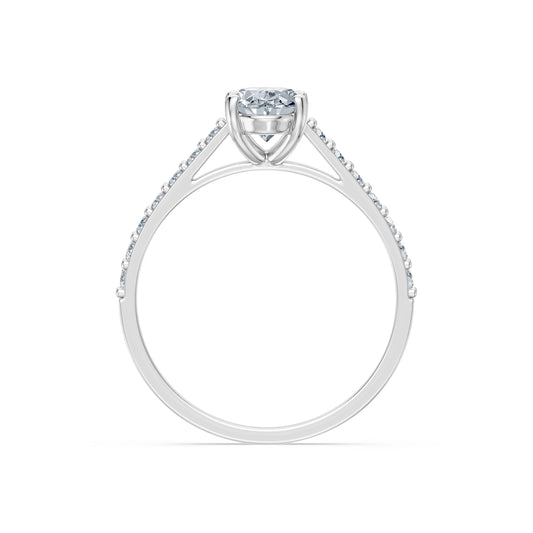
- Pavé — diamonds along the shoulders. Adds sparkle at the band rather than the centre.
- Split shank — the band divides as it meets the stone, which visually frames a longer oval well.
One practical note: ovals have exposed points at each end. A setting with prongs or a bezel covering those tips protects the most vulnerable part of the stone, and it matters if the ring is worn daily.
What an oval engagement ring costs
Our oval collection runs from £1,050 to £3,900, and the spread is driven by three things in this order: centre stone weight, lab grown versus natural, and gold carat.
Eighteen of the twenty rings here use lab grown diamonds. Chemically and optically they are diamond — same hardness, same refractive index, distinguishable only with specialist equipment — and they cost a fraction of a mined stone of equal specification. That is what makes a two-carat oval reachable at this price. If you specifically want a natural stone, tell us and we will quote it; expect a substantially higher figure for the same look.
Gold carat moves the price far less than people assume. The choice between 9ct, 14ct and 18ct is a wear decision, not a status one: 9ct is harder and more scratch-resistant, 18ct is richer in colour and softer. For a ring worn every day, 14ct is the middle ground most of our customers land on.
Wedding bands that fit an oval
Because the oval is long, a straight wedding band often leaves a visible gap at the ends, or worse, sits at an angle. Three approaches work:
- A contoured band shaped to follow the curve of the setting. Sits flush, but is tied to that specific ring.
- A straight band with a raised setting. If the oval sits high enough in a cathedral or basket mount, a plain band slides underneath without touching.
- Deliberate spacing — wearing the band on the other hand or with a plain spacer ring. Increasingly common and avoids committing to a shaped band.
Decide this before the engagement ring is made if you can. Setting height is far easier to plan than to change afterwards.
Guides: every question about an oval engagement ring, answered
We've written a full set of guides covering every setting, metal, stone alternative and decision that comes up when choosing an oval engagement ring:
- Oval Solitaire: Complete UK Buying Guide
- Halo vs Hidden Halo
- Three Stone, Pavé and Cluster Compared
- Why a Thin Band Works
- Yellow Gold Buyer's Guide
- White Gold Buyer's Guide
- Rose Gold Buyer's Guide
- Platinum vs Gold
- Why We Don't Recommend Silver
- Cut, Carat and Clarity Explained
- Lab Grown: Full UK Price Guide
- Moissanite vs Diamond
- Sapphire: A Coloured-Stone Alternative
- Carat Guide: 1ct to 3ct on the Hand
- Vintage and Antique: What to Look For
- Unique and Simple, Compared
- East-West: The Sideways Setting
- Oval vs Round: Which to Choose
- Pros, Cons and the Bow-Tie Effect
- Trendy or Timeless? 2026 Verdict
Common questions
How much is a 1 carat oval engagement ring?
In this collection, a one-carat lab grown oval in solid 9ct gold starts around £1,050. The same specification in 18ct costs a little more, and a natural stone of matching size and quality would be several times that.
Oval or round — which should I choose?
Round returns the most light and is the safest shape by every objective measure. Oval gives you visibly more stone for the same weight and a longer line on the finger. If maximum sparkle matters most, choose round. If presence on the hand matters most, choose oval. See our full Oval vs Round comparison.
Do oval diamonds hide dirt?
They show it, if anything. The flat, wide table on an oval collects skin oils and the dulling is noticeable sooner than on a round. Warm water, a drop of washing-up liquid and a soft toothbrush once a fortnight is enough.
Can I have a different setting from the ones shown?
Yes. Everything here is made to order in our own workshop, so the centre stone, ratio, gold carat and setting can all be specified. If you want something that is not in the collection, commission it — the first conversation costs nothing.
Frequently asked questions
What is the bow-tie effect on an oval diamond?
A dark shadow that can appear across the centre of an oval cut, caused by the way light passes through the stone's proportions — it's more noticeable on some cuts than others.
Do you check for bow-tie before sending an oval ring?
Yes, every oval diamond is hand-checked for a strong bow-tie effect before it's set, so you're not receiving a stone with an unusually dark central shadow.
What's the starting price for an oval engagement ring?
From around £1,050 in solid gold — natural and lab grown stones are both available across the collection.
Is resizing included if an oval ring doesn't fit?
Yes, free UK resizing is included on most oval solitaire and halo settings — full eternity oval bands can't be resized once made.