
Three Stone Engagement Rings in Solid 9ct, 14ct & 18ct Gold
A three stone engagement ring — called a trilogy or trinity ring in the UK — carries the clearest meaning of any setting: the three diamonds stand for the past, the present and the future of a relationship. It is the one design where the symbolism came first and the styling followed.
It is also the setting that puts the most diamond across the finger. Side stones widen the ring horizontally, so a trilogy reads considerably larger than a solitaire holding the same centre stone. Every ring here uses lab grown diamonds in solid 9ct, 14ct or 18ct gold — never plated — from £2,100, made to order in 10 to 14 days.
-
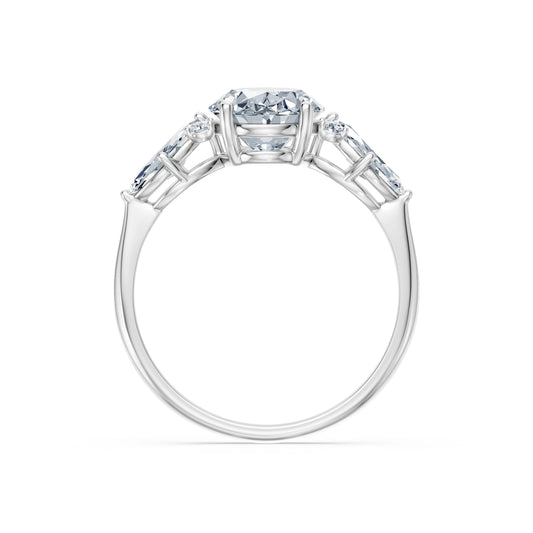
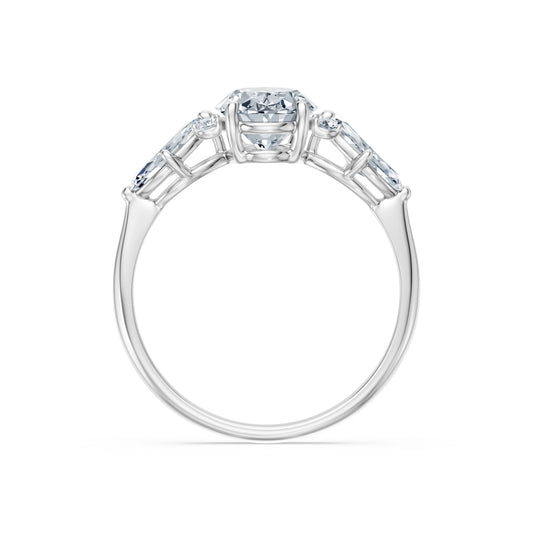
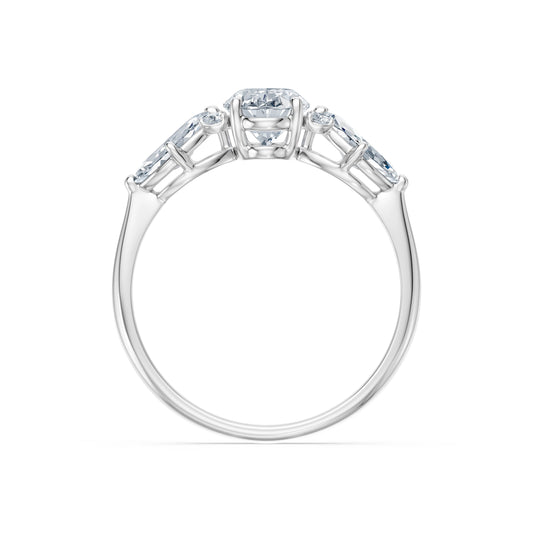
Oval Lab Grown Diamond Three Stone Engagement Ring 2.0ct | Qutahia Jewellery
Regular price From £2,750.00Regular price£3,000.00Sale price From £2,750.00Sale -
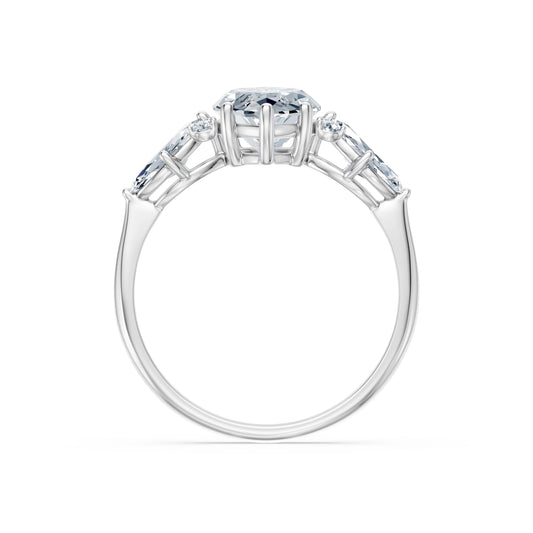
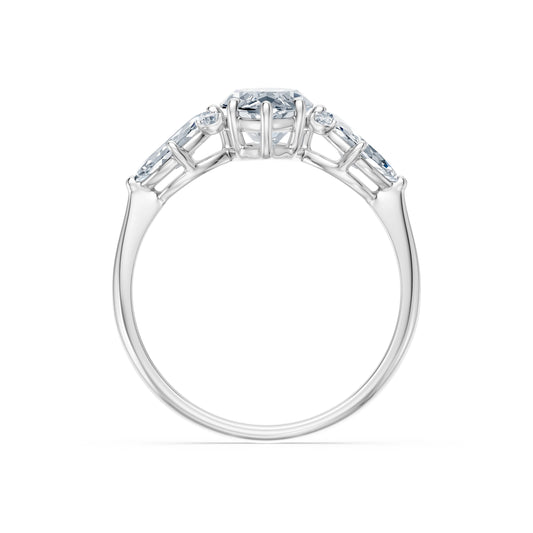
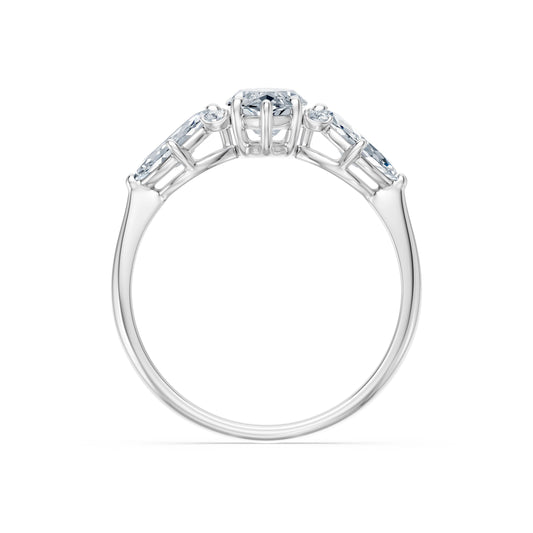
Marquise Lab Grown Diamond Three Stone Engagement Ring 2.0ct | Qutahia Jewellery
Regular price From £3,100.00Regular price£3,500.00Sale price From £3,100.00Sale -
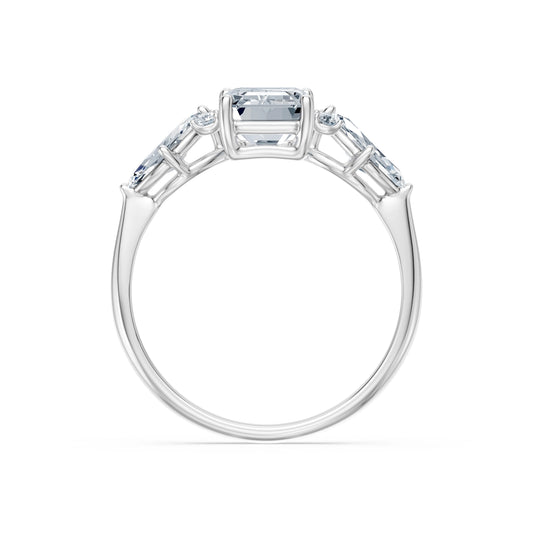
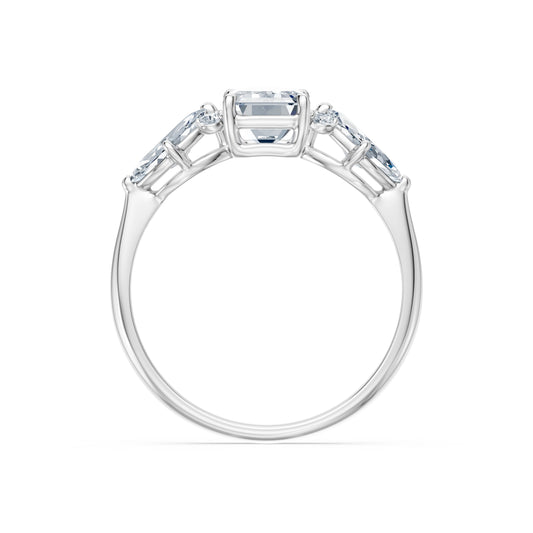
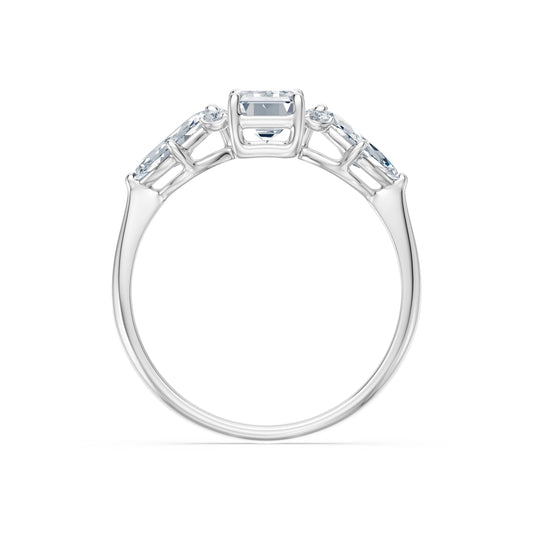
Emerald Lab Grown Diamond Three Stone Engagement Ring 2.0ct | Qutahia Jewellery
Regular price From £2,750.00Regular price£3,000.00Sale price From £2,750.00Sale -
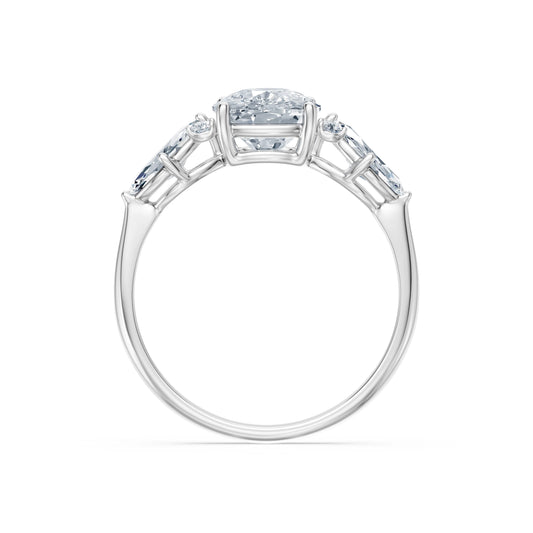
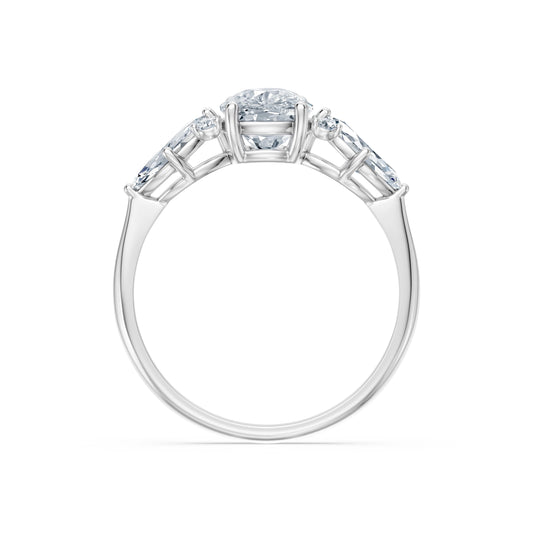
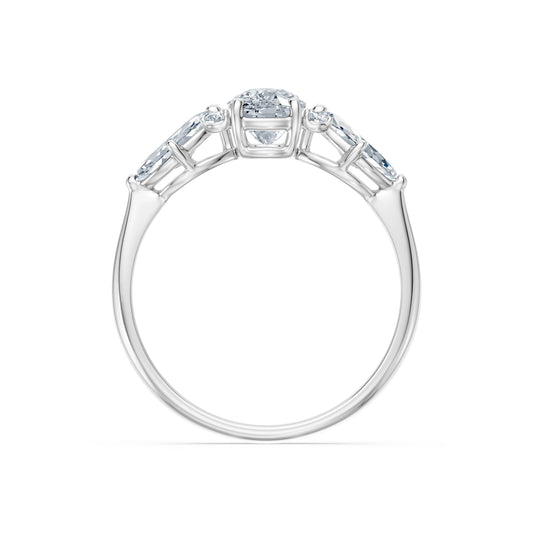
Cushion Lab Grown Diamond Three Stone Engagement Ring 2.0ct | Qutahia Jewellery
Regular price From £2,750.00Regular price£3,000.00Sale price From £2,750.00Sale -
Oval Lab Grown Diamond Three Stone Engagement Ring 1.5ct | Qutahia Jewellery
Regular price From £2,250.00Regular price£2,500.00Sale price From £2,250.00Sale -
Marquise Lab Grown Diamond Three Stone Engagement Ring 1.5ct | Qutahia Jewellery
Regular price From £2,500.00Regular price£2,750.00Sale price From £2,500.00Sale -
Emerald Lab Grown Diamond Three Stone Engagement Ring 1.5ct | Qutahia Jewellery
Regular price From £2,250.00Regular price£2,500.00Sale price From £2,250.00Sale -
Cushion Lab Grown Diamond Three Stone Engagement Ring 1.5ct | Qutahia Jewellery
Regular price From £2,250.00Regular price£2,500.00Sale price From £2,250.00Sale -
Oval Lab Grown Diamond Three Stone Engagement Ring 1.0ct | Qutahia Jewellery
Regular price From £1,750.00Regular price£2,200.00Sale price From £1,750.00Sale -
Marquise Lab Grown Diamond Three Stone Engagement Ring 1.0ct | Qutahia Jewellery
Regular price From £1,800.00Regular price£2,250.00Sale price From £1,800.00Sale -
Emerald Lab Grown Diamond Three Stone Engagement Ring 1.0ct | Qutahia Jewellery
Regular price From £1,750.00Regular price£2,250.00Sale price From £1,750.00Sale -
Cushion Lab Grown Diamond Three Stone Engagement Ring 1.0ct | Qutahia Jewellery
Regular price From £1,750.00Regular price£2,250.00Sale price From £1,750.00Sale












The carat trap: total weight versus centre weight
This is the single most useful thing to know before shopping for a trilogy, and it is where the shape of the market works against you.
A three stone ring can honestly be advertised as “2 carat” when the centre stone is 1.2ct and the two side stones are 0.4ct each. Add them up and the claim is accurate. But the ring on the finger looks nothing like a genuine 2 carat solitaire, because a 2ct single stone is dramatically wider than a 1.2ct one.
Total carat weight is not a lie, but it is not what you are picturing either. When comparing trilogy rings anywhere, ask for the centre stone weight on its own. If a seller will not separate the two figures, that tells you something.
Every ring in this collection states the centre stone weight, not a combined figure.
Matching side stones to the centre
Side stones can either support the centre or compete with it, and the deciding factor is whether their faceting matches.
- With an emerald cut centre — use step cut sides: tapered baguettes or trapezoids. Brilliant-cut rounds beside an emerald make the centre look flat by comparison.
- With an oval or cushion centre — pear or round sides echo the curve and keep the line continuous.
- With a marquise centre — smaller marquises angled outward extend the sweep and make the ring read very wide.
Proportion matters as much as shape. Side stones at roughly a third of the centre's weight support it; much larger and the ring stops having a centre at all and becomes a cluster in spirit.
Why a trilogy looks bigger than a solitaire
The eye reads width across the finger as size. A solitaire gives you one point of interest; a trilogy spreads diamond across perhaps 12 to 14 millimetres of finger.
In practice this means a 1 carat centre with side stones occupies visually similar territory to a 1.5 carat solitaire, usually for less money — because two small stones cost far less than the difference between a 1ct and a 1.5ct centre. Diamond price per carat rises steeply with size, and the trilogy exploits that curve rather than fighting it.
Wedding bands and daily wear
A trilogy is wider than a solitaire, which has two consequences worth planning for.
First, the band. Side stones set low will sit where a wedding ring wants to be. Either raise the setting, or choose a contoured band, or plan to wear the two with a spacer. Decide before the ring is made.
Second, the side stones themselves. They sit at the edges of the setting, which is the part of a ring that meets the world most often. Prongs on side stones should be checked at the same time as the centre — once a year is sensible for any ring worn daily.
What a three stone engagement ring costs
This collection runs from £2,100 to £4,250 — the highest entry point of any of our settings, simply because there are three stones to buy rather than one.
All twelve designs use lab grown diamonds. That is what makes a trilogy with a substantial centre reachable at these figures; the equivalent in natural stones would be a multiple of it, and the multiple compounds because you are buying three stones rather than one.
Gold carat moves the total least. 9ct is harder and more scratch-resistant, 18ct is richer and softer, 14ct is the usual middle ground for an everyday ring.
Common questions
What do the three stones mean?
Past, present and future — the most widely used reading, and the one that made the design popular. Some people take them as friendship, love and fidelity instead. Neither meaning is official; both are genuinely used.
Is a trilogy ring the same as a three stone ring?
Yes. Trilogy and trinity are the common British terms; three stone is the American one. Same ring.
Do the side stones have to match the centre shape?
No, and often they should not. What matters is that the faceting family matches — step cut with step cut, brilliant with brilliant. A pear side stone beside an oval centre works beautifully; a round beside an emerald cut does not.
Can I choose my own stone combination?
Yes. Everything is made to order in our own workshop, so centre shape and weight, side stone shape and size, gold carat and setting can all be specified. If what you want is not shown, commission it — the first conversation costs nothing.
Frequently asked questions
What do the three stones in a trilogy ring represent?
Traditionally, past, present and future — one of the more meaningful engagement ring styles, though plenty of customers simply choose it for the balanced, symmetrical look.
Are the three stones always the same size?
Not always — many designs use a larger centre stone flanked by two smaller side stones, though matched trios are available too. Check each product page for the carat breakdown.
What's the price range for a three stone ring?
They start from around £2,100 in solid gold with lab grown diamonds, reflecting the extra stone weight compared with a single-stone solitaire.
Can the side stones be a different shape to the centre stone?
Yes, mixing shapes — for example a round centre with baguette side stones — is a common and available combination across our trilogy designs.