
Solitaire Engagement Rings in Solid 9ct, 14ct & 18ct Gold
A solitaire engagement ring is one diamond on a plain band, and that simplicity is the point: with no accent stones to pay for, every pound of the budget goes into the centre stone. Every solitaire here is set in solid 9ct, 14ct or 18ct gold and made to order in 10 to 14 days — never plated, never gold-filled.
Prices start from around £1,100 for a 1 carat lab grown stone in 9ct gold. Choose round brilliant for maximum sparkle or oval for the largest face-up size at the same carat weight, in yellow, white or rose gold.
-
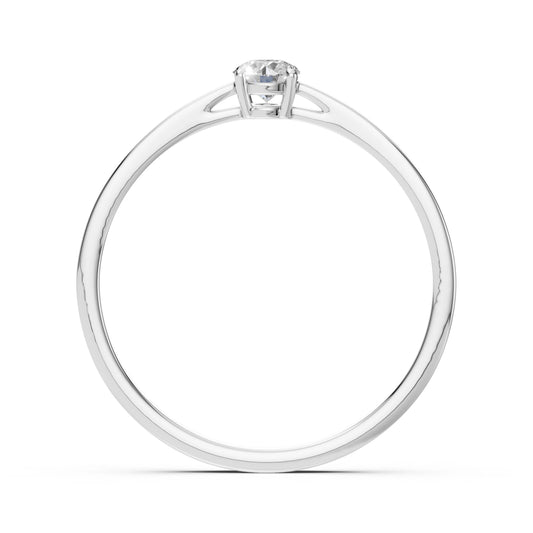
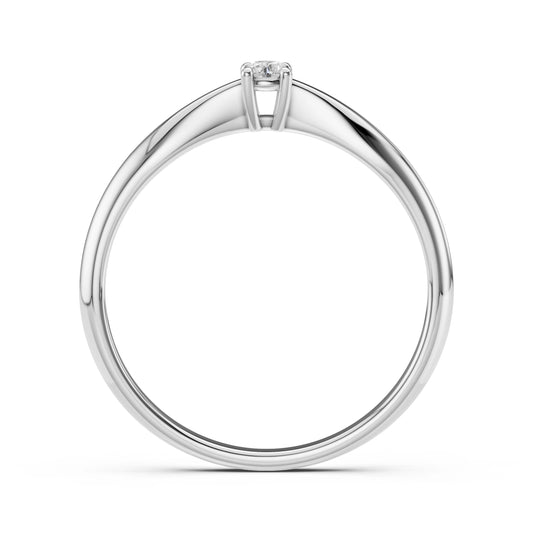
Slim Band Solitaire Diamond Ring Round 0.2ct | Qutahia Jewellery
Regular price From £550.00Regular price£700.00Sale price From £550.00Sale -
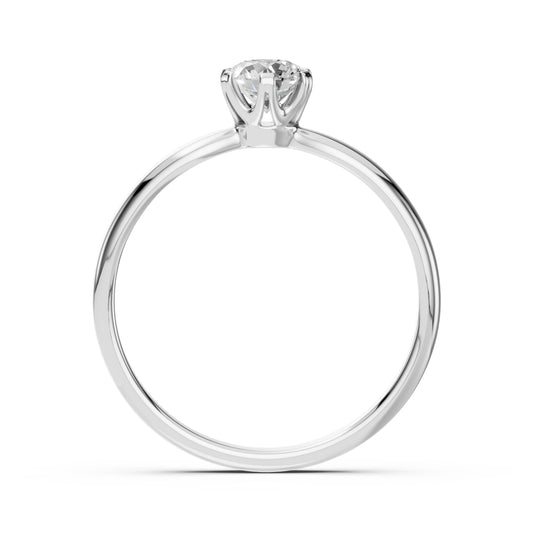
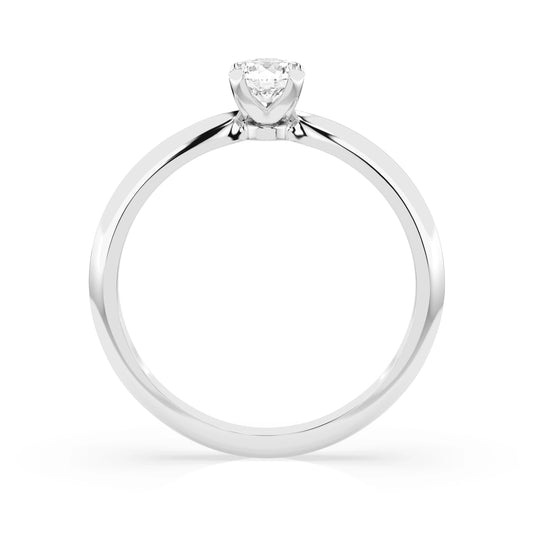
Solitaire Diamond Ring Round 0.45ct | Qutahia Jewellery
Regular price From £900.00Regular price£1,100.00Sale price From £900.00Sale -
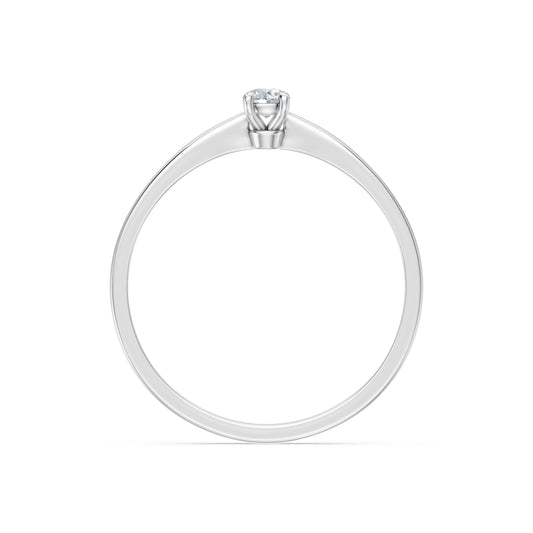
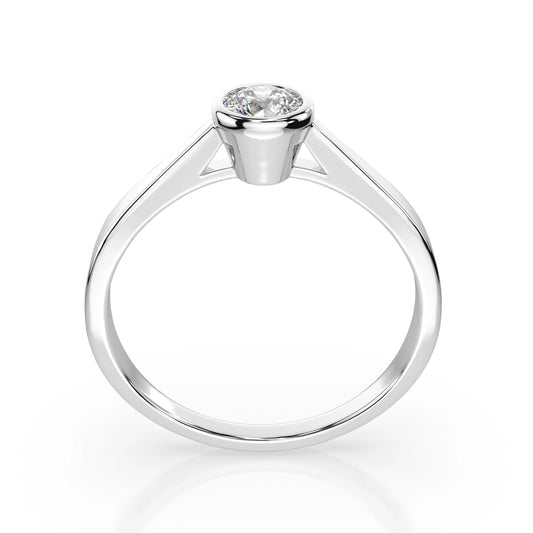
Solitaire Diamond Ring Round Brilliant 0.1ct | Qutahia Jewellery
Regular price From £300.00Regular price£475.00Sale price From £300.00Sale -
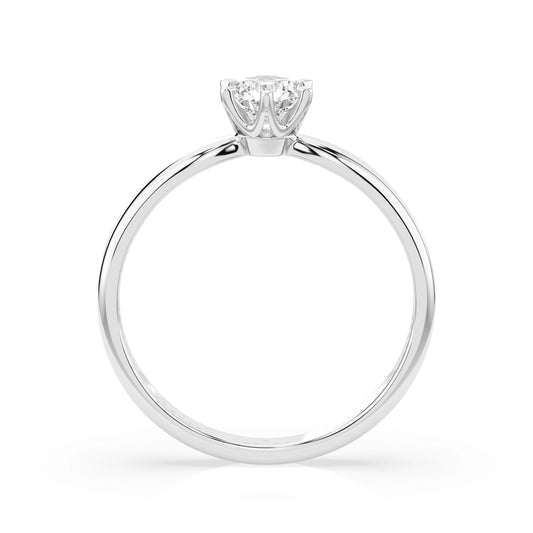
Raised Six Claw Solitaire Diamond Ring Round 0.25ct | Qutahia Jewellery
Regular price From £800.00Regular price£1,000.00Sale price From £800.00Sale -
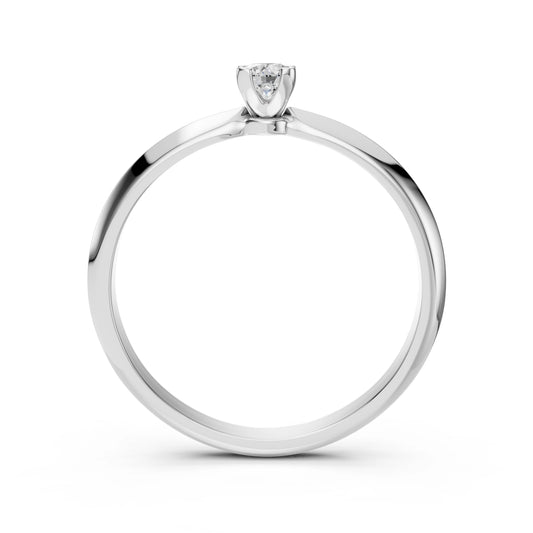
Classic Four Claw Solitaire Diamond Ring Round 0.06ct | Qutahia Jewellery
Regular price From £600.00Regular price£750.00Sale price From £600.00Sale -
Crossover Twist Solitaire Diamond Ring Round 0.25ct | Qutahia Jewellery
Regular price From £750.00Regular price£950.00Sale price From £750.00Sale -
Crossover Twist Solitaire Diamond Ring Round 0.1ct | Qutahia Jewellery
Regular price From £475.00Regular price£600.00Sale price From £475.00Sale -
Crossover Band Solitaire Diamond Ring Round 0.3ct | Qutahia Jewellery
Regular price From £700.00Regular price£900.00Sale price From £700.00Sale








What a Solitaire Engagement Ring Actually Is
A solitaire is a single diamond held on a plain band, with no side stones, halo or pavé. “Solitaire” describes the setting, not the shape of the stone — a solitaire can be round, oval, emerald, cushion, princess or pear. Because there is nothing else on the ring to fund, a solitaire puts more carat weight on the finger per pound spent than any other setting, which is why it has remained the default engagement ring for over a century.
The second reason it endures is practical. A plain band takes daily contact against keys, handles and keyboards without exposing accent stones to it, and it resizes easily because there is unset gold at the back. Rings that are worn every day for forty years tend to be simple ones.
Choosing the Stone: Round or Oval
Round brilliant returns more light than any other cut and is the classic solitaire stone. Oval is the fastest-growing alternative for a reason: at the same carat weight it presents a visibly larger face and its elongated outline lengthens the finger. A 1 carat round measures about 6.4mm across; a 1 carat oval reads noticeably bigger from above.
Emerald suits a solitaire well because there is nothing competing with its long, mirror-like flashes — but it shows clarity openly, so it needs a cleaner stone. Princess and cushion both cost less per carat than round.
Which Wedding Band Goes With a Solitaire?
This is the question most people ask after buying, and it is worth answering before. A solitaire with a low setting sits flush against a flat wedding band, so a plain court or D-shape band in the same metal fits cleanly with no gap. A high or cathedral setting lifts the stone and leaves a visible gap at the base — the usual solutions are a shaped or contoured band that curves around the setting, or a thin plain band worn with the gap accepted as part of the look.
Match the metal purity as well as the colour: a 9ct band worn constantly against an 18ct ring will wear the softer 18ct faster, because the harder alloy abrades the softer one. Our diamond eternity rings work as diamond-set wedding bands — choose half eternity rather than full if you want it resizable later.
What a Solitaire Costs
A 1 carat lab grown solitaire starts from around £1,100 in 9ct gold, £1,360 in 14ct and £1,575 in 18ct. At 1.5 carat the range starts near £1,400 and at 2 carat near £1,790. A mined diamond of comparable colour and clarity typically costs three to five times more — see lab grown diamond engagement rings for the full comparison, including the honest caveat on resale value.
The old “three months’ salary” rule was an advertising line written in the 1930s, not a standard. There is no correct amount.
A Note on Platinum
We work in solid gold rather than platinum, and we would rather say so plainly than let you find out at checkout. Platinum is denser, whiter without rhodium plating, and holds claws exceptionally well — it is a genuinely excellent metal for a solitaire. It is also considerably more expensive and, being softer than 9ct gold, scuffs into a patina rather than staying polished. If white is the look you want, 9ct or 18ct white gold gives the same cool tone at a lower price; it is rhodium plated and benefits from replating every few years.
Explore the Collection
Prefer some sparkle on the band? See pavé, or a hidden halo that makes the centre stone read larger without changing the outline from above. Browse all engagement rings or the full diamond rings collection. Check sizing with the ring size guide, read 9ct gold vs 18k gold before choosing a metal, or start your bespoke design.
Solitaire Engagement Ring Questions, Answered
A single diamond set alone on a plain band, with no side stones or halo. The word describes the setting rather than the diamond shape — round, oval, emerald and princess solitaires are all common.
A flat or court band sits flush against a low-set solitaire. If the setting is high or cathedral, a shaped band that curves around the base closes the gap. Matching the metal purity matters as much as the colour, because a harder alloy will wear a softer one.
There is no rule. 0.50ct to 0.75ct sits neatly on most hands; 1 carat is the most requested size in the UK and reads clearly without dominating; 1.5ct and above has obvious presence. Cut quality affects how large a stone looks more than weight alone.
Four claws leave more of the diamond visible, so the stone reads slightly larger. Six claws hold more securely and spread the pressure, which is the safer choice above 1 carat or for hands-on work.
Yes. The back of the band is plain gold, so a jeweller can cut and rejoin it without touching the setting. We offer free UK resizing. Full eternity rings are the exception — those cannot be resized at all.
It is the most requested engagement setting in the UK and has been for decades. Halo and hidden halo designs move in and out of fashion; a plain solitaire is the design least likely to look dated in twenty years, which is a reasonable thing to want from a ring worn for life.
Frequently asked questions
What is a solitaire engagement ring?
A single diamond set on its own, usually with claw or bezel prongs, with no additional stones — the classic, most timeless engagement ring style.
How long does a solitaire ring take to make?
Typically 10-14 days, since it's made to order around your chosen diamond, gold purity and ring size.
What's the starting price for a solitaire engagement ring?
From around £1,100 in solid gold with a lab grown diamond — natural stones start higher depending on carat and grading.
Claw or bezel setting — which shows more of the diamond?
A claw setting exposes more of the stone to light for maximum sparkle; a bezel setting wraps metal around the edge for a lower-profile, more protected look.